
Rethinking Fall Management for Residents Living with Dementia
July 30, 2026
11:48 am
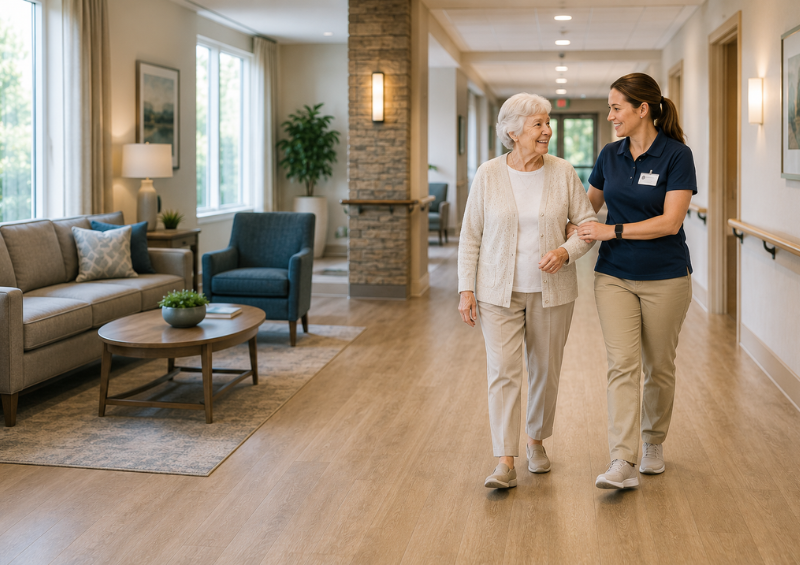
Every senior care provider wants to reduce falls with major injury. But for residents living with dementia, implementing effective fall management strategies isn’t always straightforward.
A new study examining fall prevention for older adults with dementia and cognitive impairment found that success often depends not only on selecting the right interventions, but also on whether they can be consistently implemented in everyday care.
Implementation Matters
Senior care providers have more fall management tools available than ever before. Exercise programs, medication reviews, staff education, sensors, wearables, and AI-powered monitoring all have an important role to play.
The challenge is that many interventions rely on residents remembering instructions, using assistive devices correctly, or consistently participating over time. The review identified cognitive impairment, caregiver burden, staffing constraints, workflow challenges, and limited follow-up as common barriers to successful implementation.
Even proven interventions can be difficult to sustain when they depend on consistent human action every day.
The Environment Is Part of the Solution
The review also identified several factors that support successful implementation, including environmental adaptation, caregiver involvement, staff education, multidisciplinary collaboration, and passive, low-burden technologies that require little ongoing participation from residents.
These findings reinforce an important shift in senior living.
Rather than relying on a single intervention, providers are increasingly building comprehensive fall management strategies that combine clinical care, technology, and the built environment.
Every Layer Plays a Different Role
No single solution can eliminate falls. Fall prediction technologies help identify residents at increased risk.
Fall detection technologies improve awareness when an event occurs. Clinical interventions guide treatment and future care planning.
Passive environmental solutions, such as Viconic Fall Defense, help reduce the risk of a fall becoming a major injury by providing protection at the moment of impact.
Together, these approaches create a stronger, more resilient fall management strategy.
Looking Ahead
The research reinforces an important lesson: successful fall management isn’t just about choosing the right intervention. It’s about implementing strategies that work within the realities of dementia care.
By combining people, processes, technology, and the built environment, providers can better protect residents while supporting the teams who care for them.
September 23, 2026

September 2, 2026