
Creating Dementia-Friendly Spaces to Reduce Fall Injury Risk
September 23, 2026
10:27 am
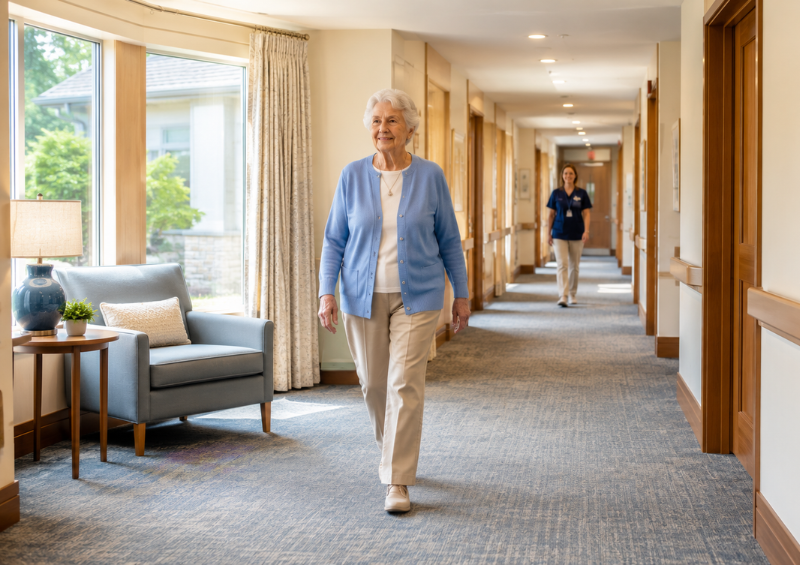
Falls among people living with dementia are rarely caused by a single factor. Mobility, medications, sleep, behavior, lighting, noise, flooring, and daily routines can all influence risk.
During the LeadingAge Southeast 2026 session "Creating Dementia-Friendly Spaces to Reduce Fall Injury Risk," experts representing senior living operations, architecture and design, development, and technology explored how these factors can work together to support a more comprehensive fall management strategy.
See the Environment Through the Resident's Eyes
For someone living with dementia, glare may obscure a flooring transition, a shadow may resemble a step, and a busy pattern may appear to move. Noise, disrupted sleep, long walking distances, and changes in routine may also contribute to confusion or affect balance and awareness.
When a fall occurs, communities should look beyond the incident itself:
- When and where did it happen?
- What could the resident see and hear?
- Was there a change in lighting, flooring, or routine?
- What may the resident have been trying to do?
Understanding the resident's experience can help teams identify environmental and operational changes that may reduce future risk.
Design for Safer, More Confident Movement
Dementia-friendly design can reduce confusion and make spaces easier to navigate. Strategies discussed during the session included:
- Providing bright, even lighting while minimizing glare and dramatic transitions
- Using contrast to distinguish floors, walls, handrails, furniture, and important edges
- Selecting small-scale, non-directional flooring patterns
- Creating flush, level transitions between flooring materials
- Supporting intuitive wayfinding with recognizable images and clear visual cues
- Addressing acoustics as hard-surface flooring becomes more common
- Using daylight and circadian lighting to support healthier sleep patterns
These principles can inform new construction and renovations while also identifying practical improvements within existing communities.
Pair Active Insight with Passive Protection
Sensors, monitoring platforms, and AI-supported technologies can help communities identify changes, detect falls, and better understand risk. However, prediction and detection do not change what happens when a resident contacts the floor.
Installed beneath the finished floor, Viconic Fall Defense adds a passive layer of injury protection that is always working—without cameras, wearables, batteries, alerts, connectivity, or resident participation. Providers using Viconic have reported an 84% reduction in falls with major injury to date.
Active technologies can help communities understand and respond to fall risks. Passive protection can help reduce the consequences when a fall still occurs. Together with dementia-friendly design and informed operating practices, they create a more complete approach to fall management.
Learn how Viconic Fall Defense adds passive injury protection to a comprehensive fall management strategy.
September 23, 2026

September 2, 2026