
Breaking Down the 84% Reduction in Severe Fall Injuries: What’s Driving It?
April 16, 2026
1:44 pm
Reducing falls has long been the goal in senior care. But the data is starting to tell a different story—one that shifts the focus from prevention alone to what actually determines outcomes.
Falls Aren’t Going Away—But Outcomes Can Change
Falls remain one of the most persistent challenges across skilled nursing, assisted living, and memory care. Despite ongoing focus, they continue to happen—often with serious consequences.
But here’s the reality:
We can’t prevent every fall.
And if we try to, we risk something just as damaging—eroding resident autonomy, confidence, and quality of life.
Limiting movement, over-monitoring, or restricting independence may reduce incidents on paper—but it often leads to:
- Reduced mobility
- Increased fear of falling
- Social withdrawal
- Faster functional decline
So the goal has to evolve:
Not just preventing falls—but changing what happens when they occur.
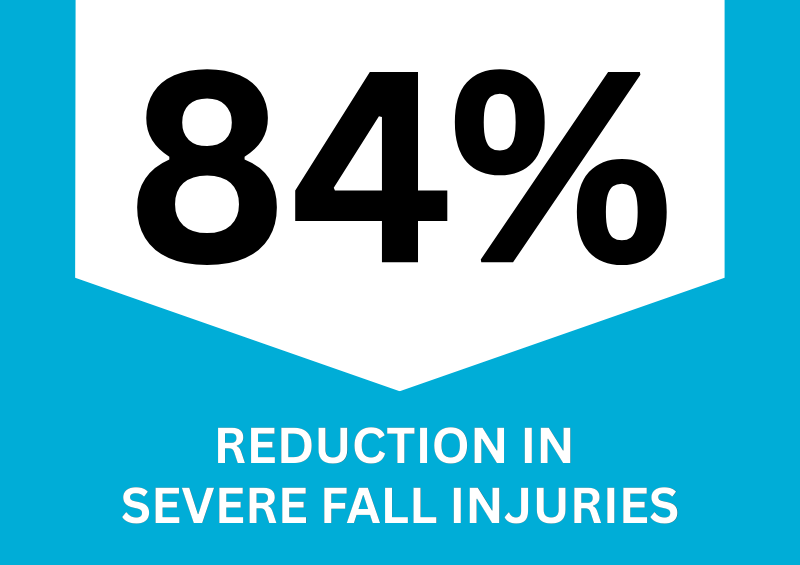
That’s where a new level of performance is emerging—including an 84% reduction in severe fall-related injuries to date*.
Why Traditional Strategies Plateau
Most fall management efforts focus upstream:
- Risk assessments
- Care planning
- Staff training
- Alarms and monitoring
These reduce risk—but they don’t address the moment when injury actually occurs.
Because when a fall happens, it’s fast, often unwitnessed, and unpredictable.
Injury doesn’t happen during prevention.
It happens at impact.
What Drives Injury Severity
Severe injury in a fall comes down to a few factors:
- Impact force
- Resident condition (frailty, bone density, cognition)
- Fall dynamics
And today’s residents are more medically complex than ever. Even low-energy falls can result in major injury.
You can’t fully control how someone falls.
You can’t change their physiology.
But you can influence one critical variable: How the body meets the floor.
The Missing Layer: The Built Environment
One factor has been consistently overlooked: the environment itself.
- Traditional flooring transfers force back to the body
- Impact-absorbing systems reduce that force
And unlike staff or devices, the environment is:
- Always present
- Always active
- Not dependent on compliance
It’s the only intervention involved in every fall.
What’s Behind the 84% Reduction?
This level of reduction isn’t luck—it’s structural. It comes from addressing the exact moment injury occurs.
1. Consistency
No reliance on staff response or behavior. The intervention is always in place.
2. Immediate Impact Response
Reduces peak force at the moment of contact—when injury happens.
3. Fit for High-Risk Populations
Particularly relevant in:
- Skilled nursing
- Memory care
- Assisted living residents aging in place
4. System-Level Effect
No workflow disruption. No training dependency. Scales across environments.
Change the surface, and you change the outcome.
Why This Matters Now
Severe fall injuries impact more than resident health. They drive:
- Hospitalizations
- Liability exposure
- Survey risk
- Staff burden
At the same time, operators are managing:
- Rising acuity
- Staffing shortages
- Margin pressure and reimbursement challenges
There’s less room than ever for avoidable downstream costs.
Reducing injury severity is both a clinical and financial strategy.
A Better Model: Protection Without Restriction
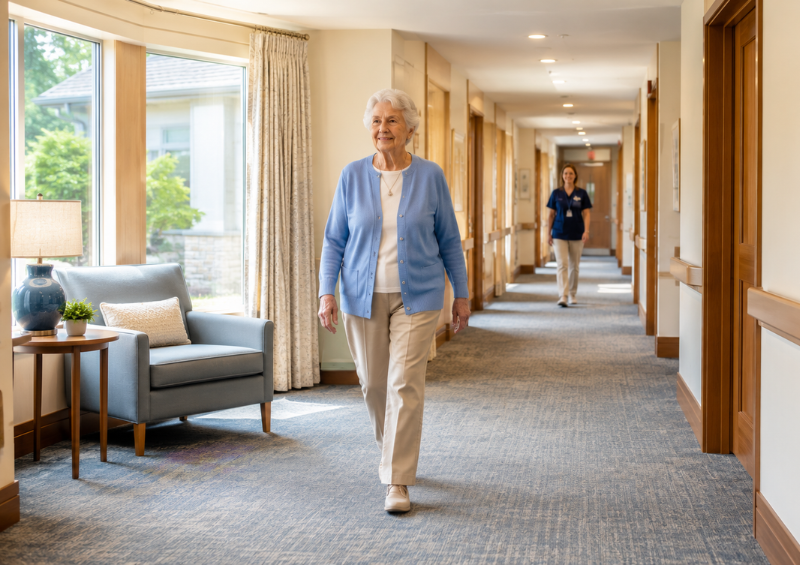
The future isn’t about choosing between safety and independence. It’s about enabling both.
That means shifting from:
“How do we stop every fall?”
To:
“How do we reduce harm when falls occur?”
Because residents should be able to:
- Move freely
- Maintain independence
- Engage in daily life
Without the environment increasing the consequences.
Where to Start
This doesn’t require a full overhaul. Focus on high-risk areas:
- Bedside
- Bathrooms
- Transition zones
Look for opportunities during:
- Renovations
- New construction
- Capital projects
- Targeted upgrades
Evaluate solutions based on:
- Proven impact reduction
- Infection control compatibility
- Staff usability
The Bottom Line
Falls will happen. That’s the reality.
But severe injuries don’t have to.
The 84% reduction isn’t about preventing falls—it’s about finally addressing what happens when they occur.
Viconic Fall Defense is designed for that exact moment—reducing impact forces beneath the surface while supporting the autonomy, confidence, and quality of life residents deserve.
September 23, 2026

September 2, 2026